 New technologies, when used by the
general population, inevitably change the way a culture operates.
Everyone has different opinions on new technologies: some believe
they make life better than ever before, and some claim that they ruin
vital aspects of the culture they live in. There are both promises
and perils of grassroots activism in the new/digital twenty-first
century media age, because no new technology is entirely good or bad.
The Web 2.0 technology of today
enables us to create and share information with more speed than ever
before, but with the use of such technology, we make ourselves
vulnerable to the exploitation of our information. Sites which
help us connect and spread ideas, such as Facebook and
Twitter, are also being used as tools to collect our
information so that it can be sold to advertisers, enabling them to
better target their desired audiences.
New technologies, when used by the
general population, inevitably change the way a culture operates.
Everyone has different opinions on new technologies: some believe
they make life better than ever before, and some claim that they ruin
vital aspects of the culture they live in. There are both promises
and perils of grassroots activism in the new/digital twenty-first
century media age, because no new technology is entirely good or bad.
The Web 2.0 technology of today
enables us to create and share information with more speed than ever
before, but with the use of such technology, we make ourselves
vulnerable to the exploitation of our information. Sites which
help us connect and spread ideas, such as Facebook and
Twitter, are also being used as tools to collect our
information so that it can be sold to advertisers, enabling them to
better target their desired audiences.

Clay Shirky's book, Cognitive
Surplus(link), focuses on the positive aspects of today's Web
2.0. According to Shirky, we now have more free time than people did
a hundred years ago. Because there is such widespread access to the
internet, many people are spending this free time online. Shirky uses
the example of the Ushahidi, a non-profit organized to map the
violence in Kenya beginning in 2008. Shirky states that the website
was “design to help a distressed population in a difficult time”
(Shirky, 17). This is an example of using cognitive surplus for civic
values. He compares this to the phenomenon of lolcats, “the
stupidest possible creative act” (Shirky, 18), which is the product
of personal use of surplus that serves as innocent humor for the
specific group of people who make and enjoy such things.
Both lolcats and Ushahidi are
important products of free time spent on the internet. We need
important causes which can easily and quickly be organized through
social media, but we also need innocent things to laugh at. Shirky
states that “To participate is to act as if your presence matters”
(Shirky, 21). It is impossible to have one and not the other when
using the internet. This also applies to sites such as Facebook and
Twitter, which are huge players in connecting people around the
world. In Revolution 2.0,
Wael Ghonim describes how he used social media as a huge part of
starting the Egyptian revolution with his page titled "Kullena
Khaled Said": “More than 100,000 members were reached through
the page in a few short days” (Ghonim, 73). This Facebook page
proved to be an essential way to gather Egyptians and eventually
others around the cause.
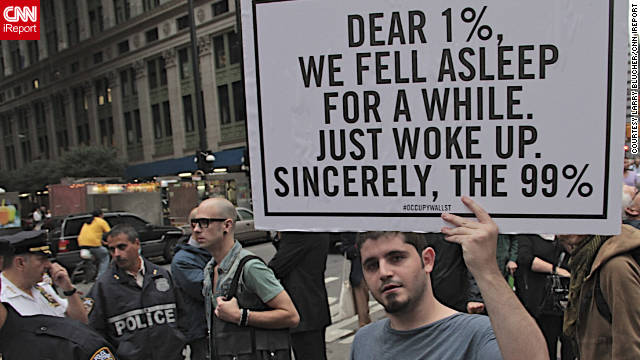
Young
Americans are starting to organize in a similar way, according to the
film Owned
and Operated.
The Occupy movement is strikingly similar to the Egyptian Revolution.
Ghonim speculates a fair amount about what will change Egypt, and
near the beginning of the book he states that “It was change, not
individuals that could unite Egyptians” (Ghonim, 73). Americans,
particularly those in their twenties, are protesting against the
unfairness of our economy and are demanding the government do
something about it. The movement is very active in the real world
already, but I think social media has had a huge impact on Occupy as
it did with the Egyptian Revolution.
The
internet makes us capable of many great things, but there are also
perils to partaking in this facet of our culture. According to
Nicholas Carr in his book The
Shallows,
the internet is changing the very way we think. It is making us have
shorter attention spans, especially when it comes to reading text,
and is making us think on a more shallow level. This makes more and
more sense when Carr gives examples of technologies in history which
majorly changed certain tasks. In discussing the development of our
map-making skills, Carr states that “The more frequently and
intensively people used maps, the more their minds came to understand
reality in the maps' terms” (Carr, 41). The same thing is happening
with computers and the internet. There must be skeptics of
Carr's words as there will be of any, but I see the the
characteristics that Carr describes in myself: I find it harder to
write things by hand, it no longer comes as naturally to me; I have a
harder time focusing on a book and reading for long periods of time;
my mind is adjusted to the distracted way of thinking provided by
using the internet.

There are other perils of the
web, specifically related to social media. I have no objections to
using social media for causes, but there is always the other side:
personal use. I made the personal choice to delete my Facebook,
because I became annoyed with the mindless, unimportant posts made by
many of my “friends”. People also post things that are far too personal. Importance is relative, but for me, reading
a barrage of posts that state things such as "Waiting for my hubby to get home!" (or something along those lines, as I used to read far too many times in my news feed) is a waste of my time.
Without Facebook, there is more time in my day for my mind to
breathe, for me to allow myself to quietly contemplate, which Carr
also thinks is vital for the human mind. He indicates that “There
is no peaceful spot [on the internet] where contemplativeness can
work its restorative magic” (Carr, 220).The other aspect of social
media that I find negative is that anything I post is on the internet
for anyone to see. It is possible to change privacy settings so as to
avoid people not on the “friends” list to see one's profile, but
every comment and “like” can be tracked by companies who get paid
to collect information for advertising purposes. I learned the most
about this from Jeff Chester, who gave a lecture on the subject
at Champlain College last fall.
The gist of Chester's lecture was
that unless people don't use the internet at all, period, every click
that we make can be tracked and recorded. What we write in emails,
what we “like” on Facebook, is information that can be collected
and used for advertising purposes. To some people this may seem
harmless, but I have a problem with being watched, even if I won't
suffer any consequences. Even without Facebook my data still gets
tracked, but Facebook makes it so much easier for these companies.
When I am logged into Facebook, my activity on the site has all my
information attached to it. For example, my age, location, birthday,
and any other personal information on my profile is connected to what
I type and “like.” If I “like” something as innocent as, say,
a page about cupcakes, the information that a twenty-year-old girl
who lives in Burlington, Vermont and attends Burlington College is
interested in cupcakes. I am definitely not the only set of data
which matches this criteria, so advertisers can now use my
information to market to similar people about cupcakes.
Overall, today's media culture is
both beneficial and harmful to its users. Web 2.0 is neither good or
bad, it is simply a new tool for both this century's heroes,
villains, and everyone in between to further their causes. Those who
love it will embrace it but must be careful. Wael Ghonim believes
that “thanks to modern technology, participatory democracy is
becoming a reality” (Ghonim, 292). The skeptics can either live in
caves or take as many precautions as possible to avoid being
exploited by the media. As a cautious web user myself, I both look
forward to and dread the advances and setbacks that humanity will
endure as a result of twentieth-century media.


